
Summer 2026 · Issue 149
Helping to Make DX Happen Since 1983
In this issue
- Message from the President
- Future DXpeditions supported by INDEXA
- KP5/NP3VI Desecheo trip report
- INDEXA at Dayton Hamvention 2026
- So you want to go on a DXpedition?
- WRTC 2026 Gold Sponsor
- TX9W Marquesas
- Bouvet Island 3Y0K trip report
- Club Log DX report
- Youth on the Air
- Our supporters
- From the Editor
Message from the President
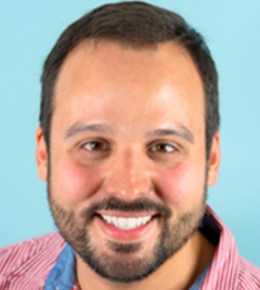
Dear INDEXA Members,
Thank you for your continued support and dedication to our organization. It has been a great start to the year, highlighted by several significant DXpeditions. I am personally proud to have been part of the Desecheo KP5/NP3VI team. This DXpedition was particularly noteworthy as it was the first-ever 100% solar-powered DXpedition and the first fully unmanned DXpedition operated remotely for 50 days. A complete report is included in this edition of our newsletter.
It is also important to recognize that two major QSO records were broken this year. KP5/NP3VI established a new record for the most QSOs made by a DXpedition operating at 100 watts or less, while J51A set a new all-time DXpedition QSO record. Congratulations to both teams on these remarkable achievements. These records will likely remain in the books for quite some time.
I would also like to highlight another important aspect of KP5/NP3VI. The DXpedition provided near-instant, free Logbook of The World (LoTW) confirmations for all contacts. This was made possible through the generosity of INDEXA members, as our organization provided approximately 50% of the funding required for the project. I am personally grateful for the support of our members in helping make this very special DXpedition a reality.
Once again, INDEXA had a booth at the 2026 Hamvention, building on the success of last year. It was a pleasure meeting many of our members and welcoming new ones who joined our organization during the event. Hamvention was very well attended, providing an excellent opportunity to promote the work and mission of INDEXA throughout the amateur radio community.
In addition, INDEXA proudly sponsored Contest University 2026 and will also be sponsoring WRTC UK, which takes place next month.
None of this would be possible without the generosity and commitment of our members. Thank you for your continued support in helping make these challenging and often expensive DXpeditions a reality.
Enjoy your summer, and thank you once again for being part of INDEXA.
73,
Otis NP4G
President, INDEXA
Future DXpeditions supported by INDEXA
INDEXA is proud to support the following future DXpeditions in 2026 and early 2027.
St. Lucia, J62K
March 2027 (support from the Next Generation Fund)
Peter I, 3Y0
February 2027
Solomon Islands, H49A
October 2026

Democratic Republic of Congo, 9T0MD
Sept./Oct. 2026
2026 KP5/NP3VI Desecheo DXpedition Trip Report
What happens when you get “No” for an answer—and still need to find a way forward? That is exactly what the 2026 KP5/NP3VI Desecheo DXpedition was all about: overcoming challenges, thinking outside the box, and ultimately proving a concept. It is hoped that the successes achieved from this DXpedition might possibly provide a ray of hope for overcoming the “No go” obstacles to some of DXing’s rarest entities and reshape future DXpedition activations around the world.
This project actually began in 2023, after returning home following my participation with the 3Y0J Bouvet DXpedition. I had been friends with Danny (KP3DR) and Alberic (NP3MR) from the Vieques Island Amateur Radio Club (NP3VI). Danny, an environmental engineer, became active again in amateur radio after Hurricane Maria. As he learned more about DXing and my recent trip to Bouvet, he realized that Desecheo was a top-wanted entity. When he reached out to me, he mentioned that he had previously worked on the island and knew the Director of the USFWS office in Cabo Rojo, Puerto Rico.
After circulating some initial ideas—and having met the Director in person in the summer of 2024—I reached out to my good friend, mentor, and fellow INDEXA Board Member, Lou (N2TU, SK), for guidance on navigating the permitting process. Following his advice, we formally submitted an application. It was rejected.
As part of the process, however, applicants are granted the opportunity to present their case. So in December 2024, I met once again with the Director.
It turns out that in 2017, Desecheo had been declared free of invasive species. After a multiyear effort involving significant resources, the endemic flora and fauna were finally recovering. Naturally, the concern was that a repeat of the 2009 K5D DXpedition—where operators lived on the island for two weeks—could undo years of conservation progress.
During our conversation, I asked what a truly low-impact operation would look like. The response was very clear: no overnight stays, no generators, no cooking—essentially no sustained human presence on the island.
I then asked: if we could meet those requirements, would the USFWS consider granting a permit?
The answer was yes.
That was the turning point.
I immediately reached out to my good friend Ezequiel (HI3R/K4DX), who had been my teammate during the 2024 Juan Fernández DXpedition. I remembered that he had been working on a new type of remote radio system. Unlike previous generations developed by others, his goal was to create a fully autonomous station—solar-powered and capable of being operated entirely remotely, without human presence on-site.
The idea was simple in concept, but complex in execution: deploy the radios on a remote island, leave, and then operate them from afar. Ezequiel was ready for the challenge. I told him he might need to accelerate development—because there was now a real possibility that Desecheo could happen.
During Dayton 2025, I met with Lee (WW2DX) and Rock (WW1X) from the Remote Ham Radio (RHR) team. I’ve known them for over a decade, as my station is part of their network. I asked how we could integrate their platform to allow operators worldwide to control a station from one of the most wanted DX entities. They began working on it—even before knowing exactly where the system would be deployed.
Months of development and testing followed. A U.S. government shutdown delayed the expedition into 2026, which turned out to be a blessing in disguise, as it coincided with the 50th anniversary of the Desecheo National Wildlife Refuge. Because this would be the first fully remote, solar-powered DXpedition, extensive testing was critical. We needed to be confident that once deployed, the system could operate without any possibility of intervention.
Our permit allowed for 30 days of operation. On December 20, 2025, I picked up Ezequiel at the San Juan airport for final preparations. Our deployment team—Ezequiel, Osvaldo (KP3N), and Manu (WP4TZ)—gathered at KP4AA’s station for assembly and testing.
We deployed the system at a mountaintop site nearby, part of KP4AA’s family property. Within 3–4 hours, the station (KP4ES) was on the air. We invited USFWS personnel to observe and inspect the setup, and they provided valuable feedback. The system ran continuously for 48 hours without issues.
On Christmas Eve, we held a final coordination meeting with Lee, Rock, Ezequiel, and myself. After reviewing all potential risks and confirming readiness, we made the decision to move forward. The idea to announce the DXpedition as a “Christmas gift” to the worldwide DX community came during discussions with Glen Johnson (W0GJ).
At 0000 UTC on Christmas Day 2025, the DXpedition was officially announced. Our website and social media channels went live, with outstanding support from our media manager, Steve, N2AJ.
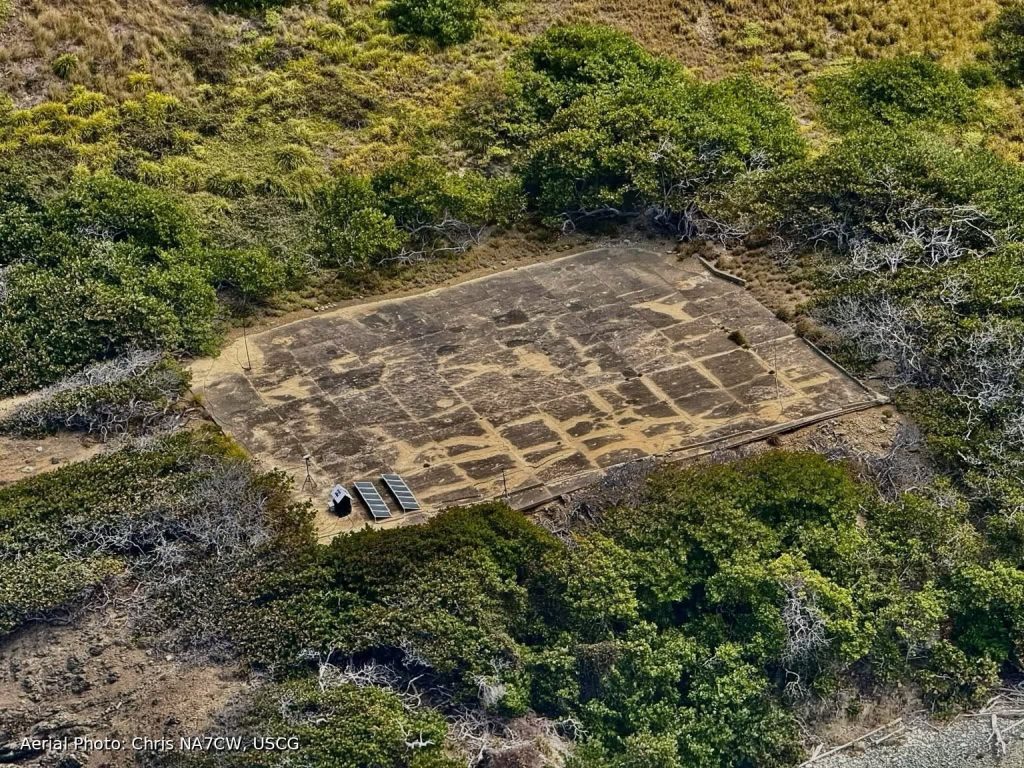
Since KP4ES was located about 30 miles from Desecheo, it also served quite nicely as our training platform. From here, our remote operators were able to familiarize themselves with the RHR system, while the DX community could test propagation and prepare for the upcoming activation. After a week of successful operation, the system was dismantled and stored following strict USFWS biosecurity protocols.
Deployment
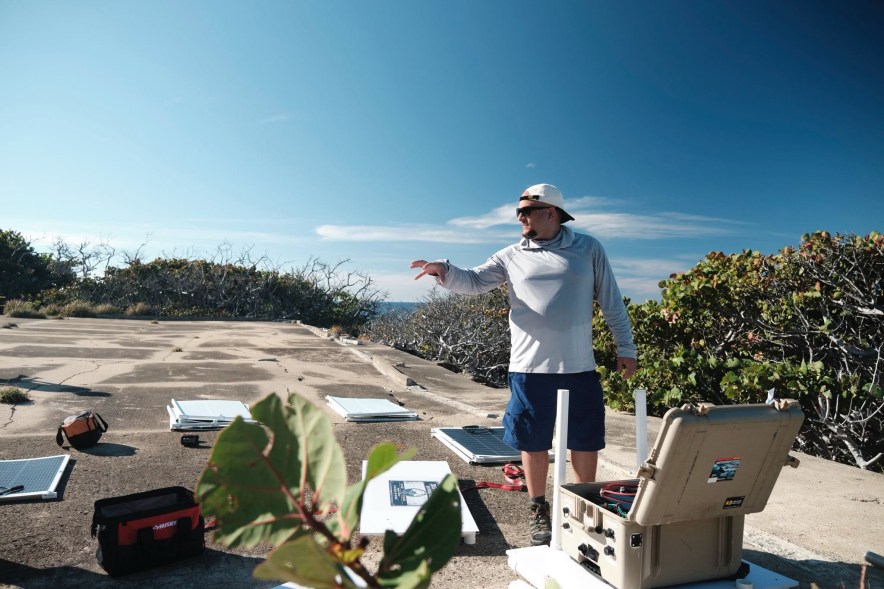
On January 12, at 5:30 AM, we arrived at the Aguadilla boat ramp, where we met USFWS Chief Biologist Nahira Arroyo and Captain Angel Toro. After loading the equipment, we began our journey just as the sun was rising over Puerto Rico. The 55-minute crossing was smooth, but once on the island, the real work began. Transporting the equipment to the helipad required multiple trips and about two hours of effort.
We began deployment with the Starlink antenna, followed by solar panels and antenna systems. Everything had been carefully planned based on our testing phase. After some troubleshooting, the first contacts were made. Lee (WW2DX) tested multiple bands and modes, confirming that everything was working as expected. With that, the station went fully operational—remotely controlled from off-island. The system was designed with redundancy in mind. Although we had the option of assembling an “ emergency trip” to correct any mishap, our system consisted of almost two entirely independent systems. It consists of two antennas, two coax feedlines, two radios, two PI computers, two batteries, two solar controllers, and two solar arrays of 6 flexible panels. The idea was that in case something would fail, we could still remain in operation until retrieval day. Before we left the island, we tested all bands for any potential RF issues and made contact with KP4AA on all bands. This ensured that no physical presence would be needed in terms of putting extra filters, chokes, etc. After we went through our checklist and all systems proved “good,” we began our operation. Little did we know that that would be the last time a human would be in the vicinity for the next 50 days. We even conducted a live session with Tim Duffy from DX Engineering before departing the island. Our return trip home that day following the arduous setup of KP5/NP3VI however, was much rougher due to changing sea conditions.
Operation and Technology
During our first week of operation we were flexible, allowing operators to test system limits and power management. By the second week, structured schedules were introduced. The idea was for us to focus on being on the bands that were the most productive in order to maximize the most unique stations in the log. Our team consisted of most operators being local to Puerto Rico and the U.S. East coast while we had backup from international operators in Italy, Philippines and Australia that would help us remain operational when most of the others were asleep. We continued to use the feedback provided by the DX community for us to continue to adjust our schedule and maximize our operation.
The system, developed by Ezequiel and the Manyana DX Foundation, provided real-time telemetry via the expedition website—battery levels, solar charging, transmit frequency, and more. We also integrated Club Log livestreaming and near real-time Logbook of The World confirmations.
This level of transparency created strong engagement with the DX community. Since the previous DXpedition was during Solar Cycle minimum, we remained focused on the high bands 10 and 12m since we knew that they were mostly needed. We also had continuous monitoring for any possible 6m opening with alerts in place and also WP4G in charge of keeping us informed in case of a Magic Band opening. This strategy proved effective when we had the very unusual 6m opening to North America in which we logged stations from East to West coast for about 5-6 hours putting in over 500 6m QSO’s in the log. This of course made a lot of DXers very happy!
Our Communications / Chief Pilot, Steve N2AJ did a fantastic job. He was in charge of getting all the data that we incorporated into our schedule and also managed to answer all emails and Social media posts. He even cheered us on, sharing with us his cleverly humorous AI graphics on our WhatsApp channel.
Our team was able to keep in communication through a “Whatsapp” group. Here, the operators would check in to their shifts and provide any feedback to the development team in case we had to make any adjustments. Sometimes the radios would lock up or need a restart, all done remotely in a matter of only a few minutes. In all, the KP5 team had fun even though we weren’t all physically operating from the same actual location. It was indeed a “virtual DXpedition” where we developed the same type of team camaraderie and interaction experienced on your typical tent and generator DXpedition. Perhaps the hardest part was balancing our normal lives with our operating schedules. Most of the retired team members would operate daytime during the week while the operators with work schedules enjoyed most of their operating time during weekends. All in all, it was an 8 week long DXpedition and all of the ops got to enjoy the never ceasing pileups from Desecheo.
Challenges and Results
Our operating permit was for a 30 day operation. When the time came for retrieval, there was bad weather in the forecast and also big sea swell so a retrieval operation was not recommended by our captain for potential safety hazards. We were kept in contact with USFWS personnel during our operation. The USFWS staff was constantly monitoring our operation through the on site camera and also through our social media channel. At that time we were at about 60k contacts in the log – far behind our original goal of 100k contacts with 20k Unique’s.
After coordinating with USFWS personnel and our captains’ availability, to our advantage the newly scheduled retrieval day was going to be 20 days later allowing us to reach our intended goal.
The station performed flawlessly. When we returned, everything was exactly as we had left it— aside from expected salt and corrosion from the marine environment.
In total, we achieved:
- Total QSOs (radio contacts): 109,291
- Unique Stations: 20934
- Total operating days: 50
- Total DXCC entities contacted: 154
- Maximum simultaneous radio stations: 2 radios at 50 watts max
Band distribution
| Frequency band | Total QSOs |
|---|---|
| 160 meters | 179 |
| 80 meters | 6,026 |
| 60 meter | 1,128 |
| 40 meters | 9,247 |
| 30 meters | 11,507 |
| 20 meters | 18,259 |
| 17 meters | 10,884 |
| 15 meters | 14,849 |
| 12 meters | 16,642 |
| 10 meters | 19,791 |
| 6 meters | 747 |
| 2 meter | 32 |
Mode distribution
| Mode | Total QSOs |
|---|---|
| CW | 35,242 |
| SSB | 20,098 |
| FT8 | 50,614 |
| FT4 | 3,306 |
| FM | 31 |
Human / digital modes
| Human modes | Digital modes |
|---|---|
| 55,371 | 53,920 |
| 50.6% | 49.3% |
Global participation
| Continent | QSOs |
|---|---|
| North America | 49,733 |
| South America | 2,854 |
| Europe | 47,379 |
| Africa | 584 |
| Asia | 7,806 |
| Oceania | 935 |
All with just 50 watts per radio.
Conclusion
This was the first fully autonomous, solar-powered DXpedition operating for an extended period without human presence on-site.
More importantly, it proved that environmentally responsible, low-impact DXpeditions are not only possible—but practical. By eliminating fuel, on-site living, and heavy logistics, we demonstrated a model that could unlock access to highly restricted and sensitive locations in the future.
The KP5/NP3VI team would like to sincerely thank INDEXA for their financial support, which made this project possible. We also thank the global DX community for embracing and supporting this new approach to DXpeditioning.
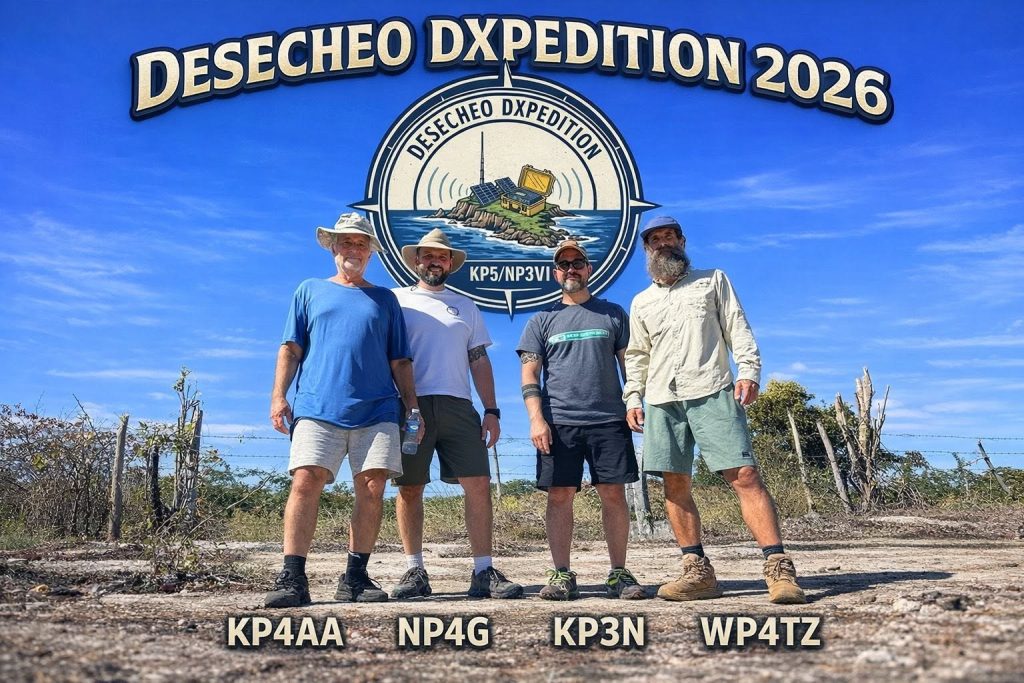
INDEXA at 2026 Dayton Hamvention
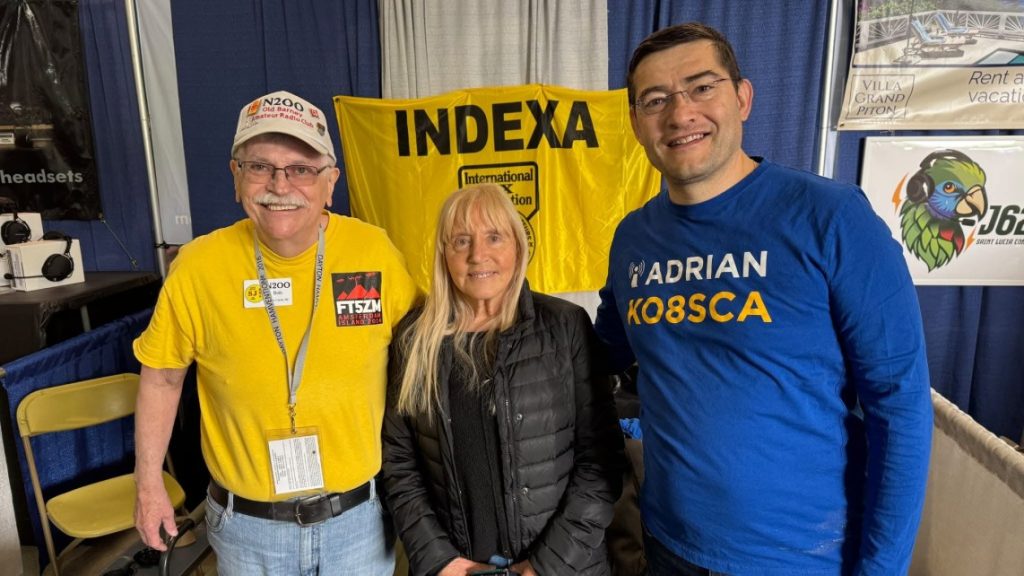
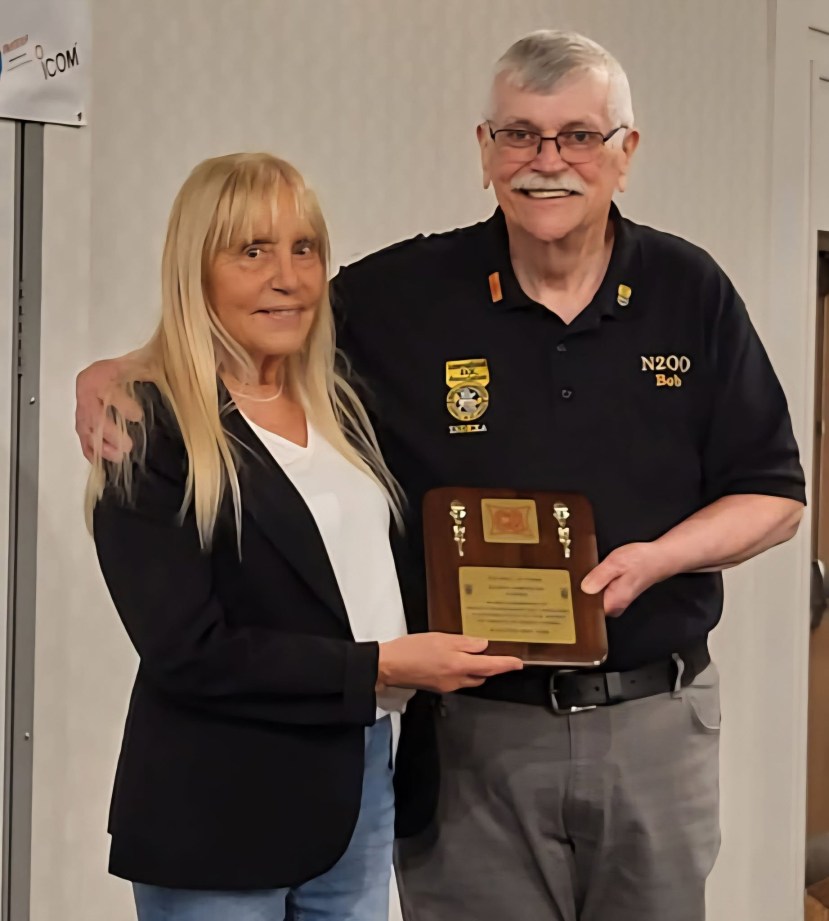
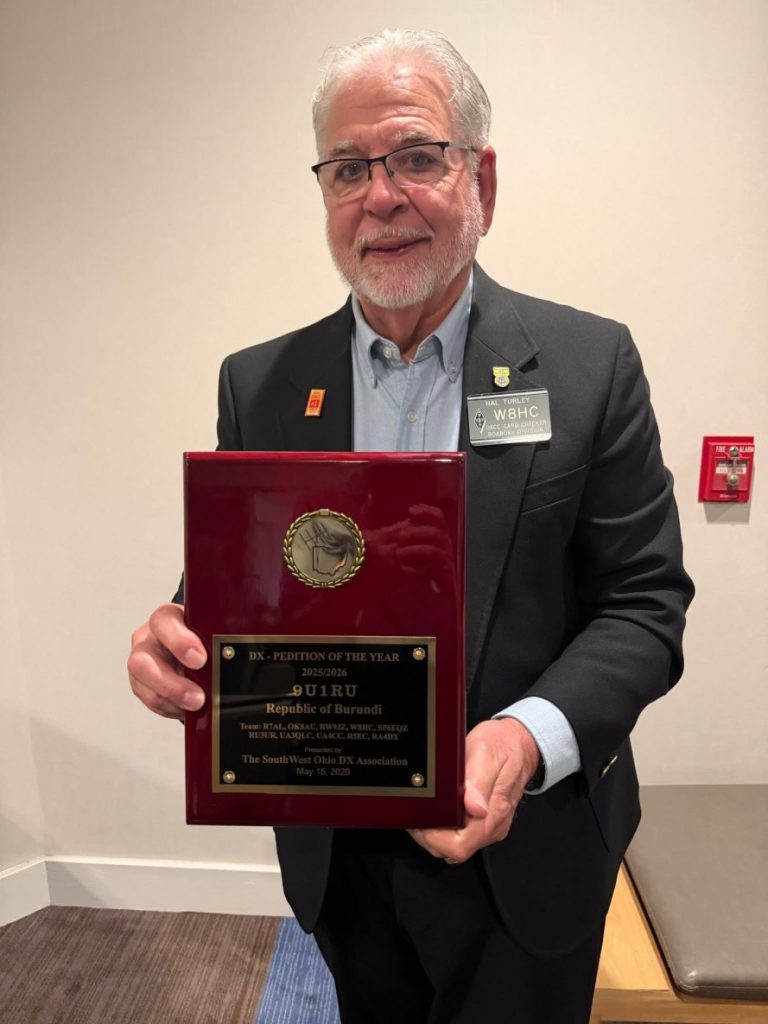
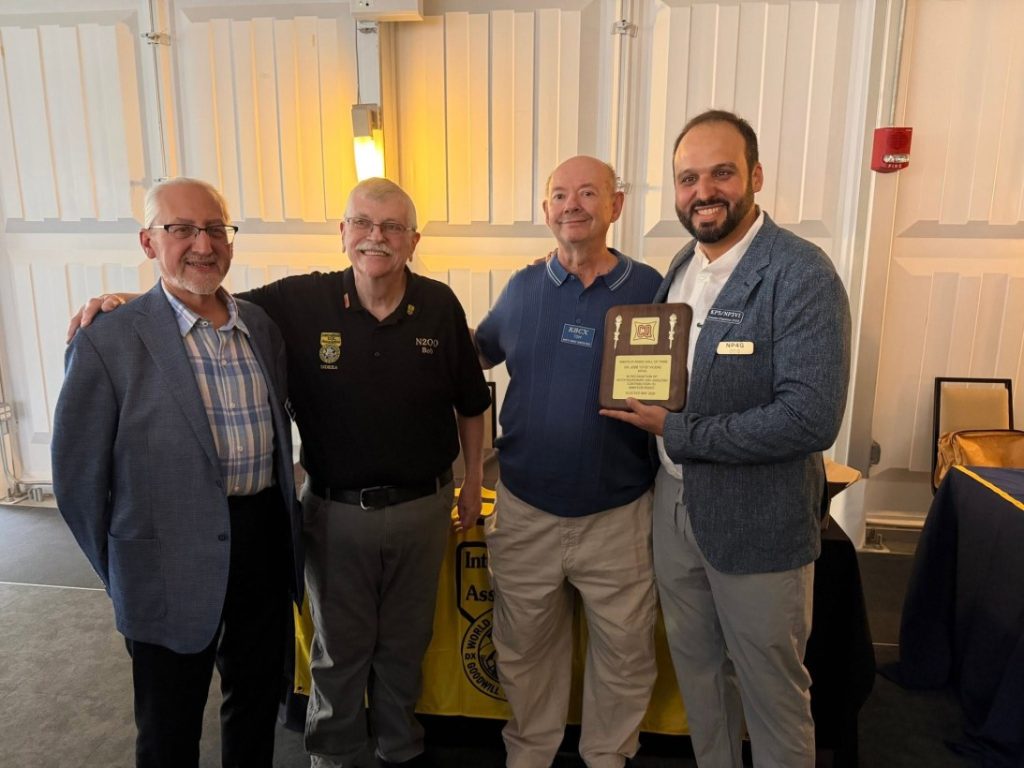
So you want to go on a DXpedition?
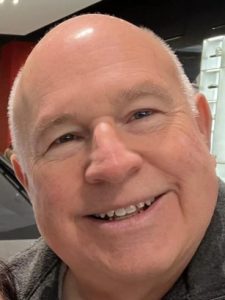
I am often asked: What’s it take to get invited to join a DXpedition? Or I am told “please keep me in mind for future trips”.
Participating in DXpeditions is one of the most enjoyable and interesting things I have ever done. The places that you see and the people that you meet are truly fascinating. You may discover, as I have, that our world is truly different than our mass media and biased news reporting would have you believe.
Prior to my first DXpedition to IRAQ, I always wondered why it was always the same guys on each team that activated these strange and interesting places. Soon, I learned that each team often builds a core part of the team. These team members are often retired or semi-retired and are able to travel with little notice. They also bring other skills to the team such as solid and reliable work ethic, a “can do” attitude, they are likely to be very strong operators and able to operate for long periods of time often under harsh conditions. They are often willing to operate in any mode, any time.
They bring a sense of excitement and adventure that adds to the excitement and passion of the team. Some guys are just hard workers. They know what needs to be done and they just get it done. These guys are the backbone of the team and their skills and knowledge are invaluable.
It is my opinion that each team should have some new talent or new people to introduce to DXpeditioning. DXpeditioning should not be an elitist function and the hobby benefits from finding and developing new players who can later go on and do more activations and eventually form and lead their own teams. This kind of activity can propel DXpeditioning activity for decades to come.
When I am approached by a newcomer who wants to join a DXpedition, I gauge their interest and ability to fit in with a team. I find that sometimes future DXpeditioners have an unrealistic expectation of what a DXpedition is like. Those that expect comfort and convenience will bring unrealistic expectations to the table. Cost is a consideration for all of us. Today’s DXpeditioner can expect to spend $250-$500 a day or more plus their cost to get to and from the DXpedition meeting point.
When building the DXpedition team, the leaders want to build a team that will be engaged and effective. They will tend to go to their core people first as these people are known for their skills and qualities. The leader knows that he must seek and maintain balance in the skills sets available.
I believe that multi-national teams are the most effective teams at meeting the huge global demand for contacts. For that reason, I prefer to build and assemble a team of US, EU, JA and South American members whenever possible.
I try to tap into the team members feeling of personal obligation to ensure that his own continent is well covered with contacts made. Never do you want to leave a continent feeling that they did not get fair and equitable access to the DXpedition team.
Strong operating skills are very important to the DXpedition team. An operator should be strong at CW and/or SSB. Willingness and ability to do multiple modes is a plus. FT8 and/or RTTY should not be an afterthought and operators that bring skills such as rapid rate and expertise with multiple decoders are desirable.
Some operators bring extra skills to the team, such as the ability to effectively troubleshoot PC & network issues. Expertise in logging programs such as N1MM, Wintest and Writelog are quite desirable. Skills in gathering log data and performing satellite uploads are very beneficial. We are often impressed by those that have the right attitude and the aptitude to succeed. Skills can be developed, honed and improved but they must be coupled with the right attitude along with the aptitude to succeed.
There have been countless times when I have been asked “Please keep me in mind for a future trip”. Quite often when I contact those people, I find that they are dreamers and not really engaged in becoming a DXpeditioner. They are not prepared to take the time away from their work and family or prepared for the cost of the DXpedition. The men that say “yes” time and time again are able to live the dream and enjoy the fun.
So when you look at the various DXpedition websites and see the makeup of the team, know that could be you going on the adventure, but only after you have aligned your expectations with those of the team and you have made your skills and abilities attractive to the team leader as he builds and assembles his team.
The future of DXpeditioning needs new blood. If you wish to join the ranks of DXpeditioners, start getting ready now so that you are prepared to say yes when that call comes.
WRTC 2026 Gold Sponsor

INDEXA is proud to be a GOLD Sponsor for the 2026 WRTC being held in the United Kingdom.
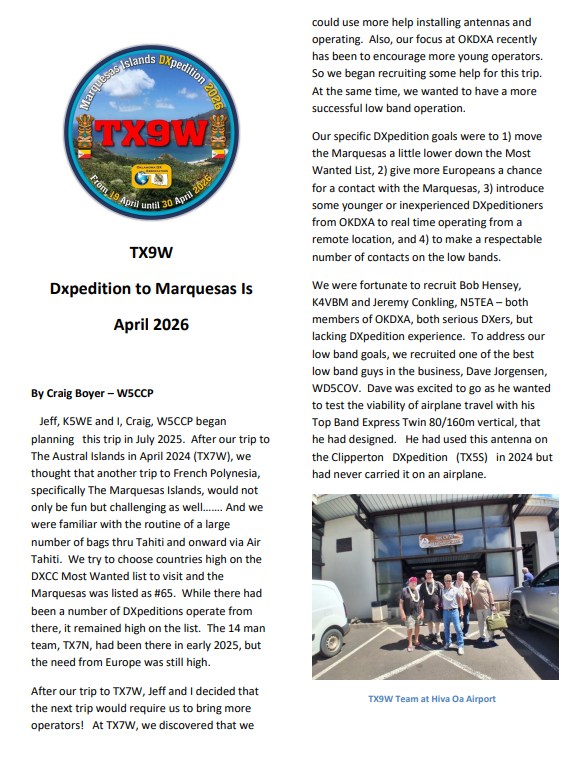
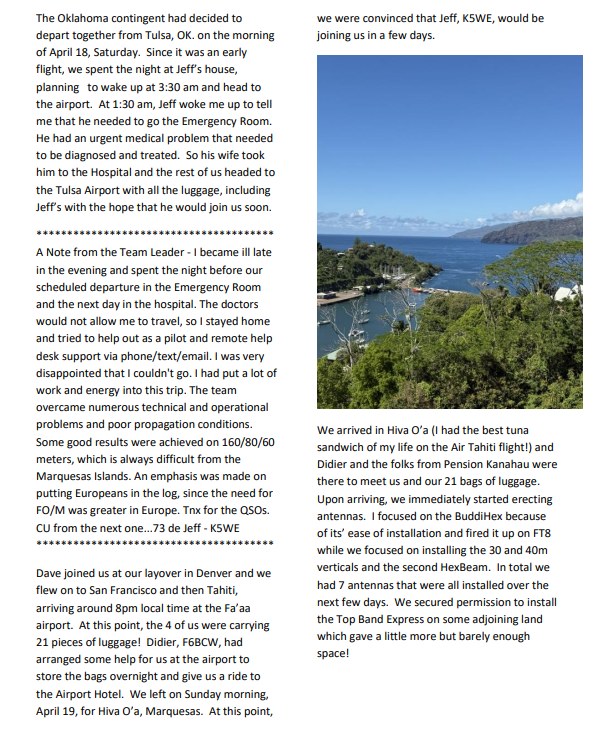
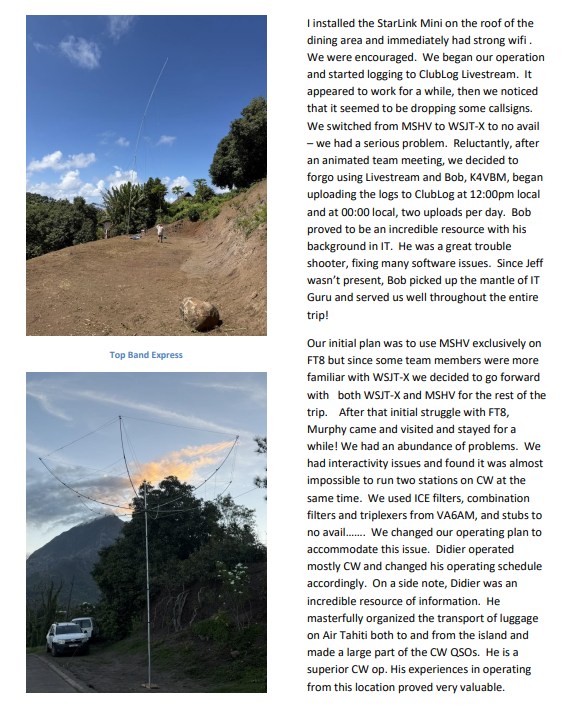
TX9W DXpedition to Marquesas Islands, April 2026
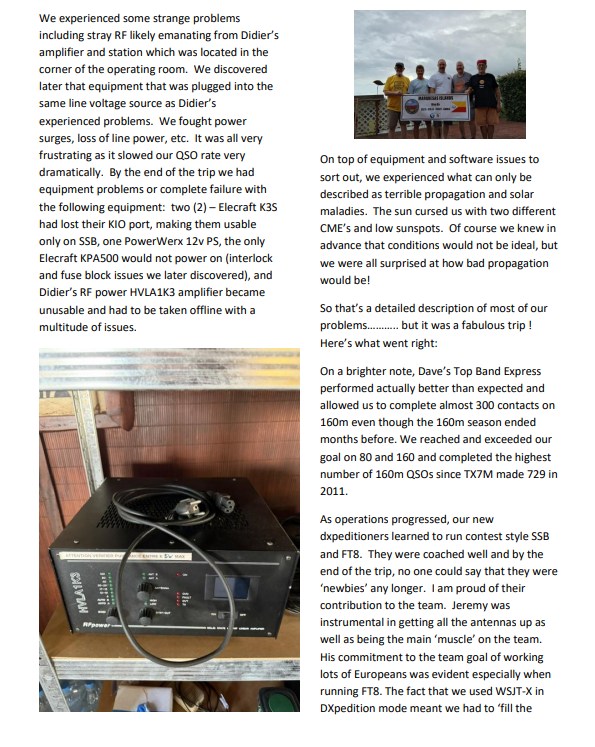
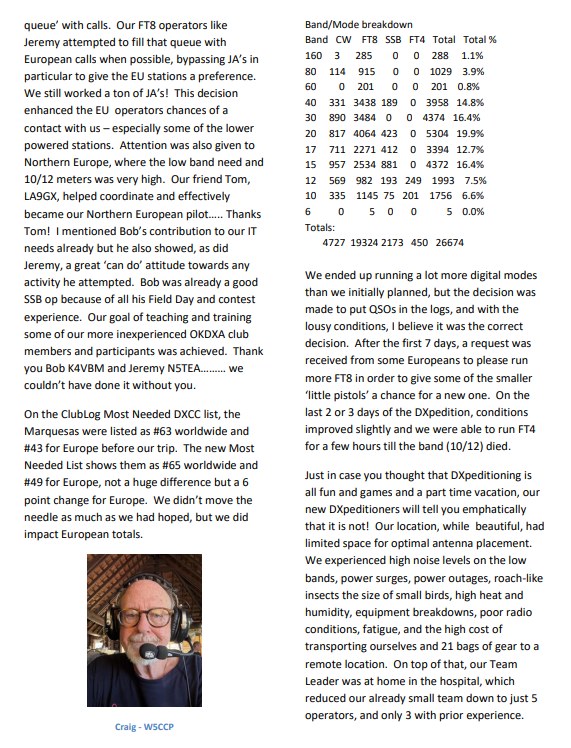
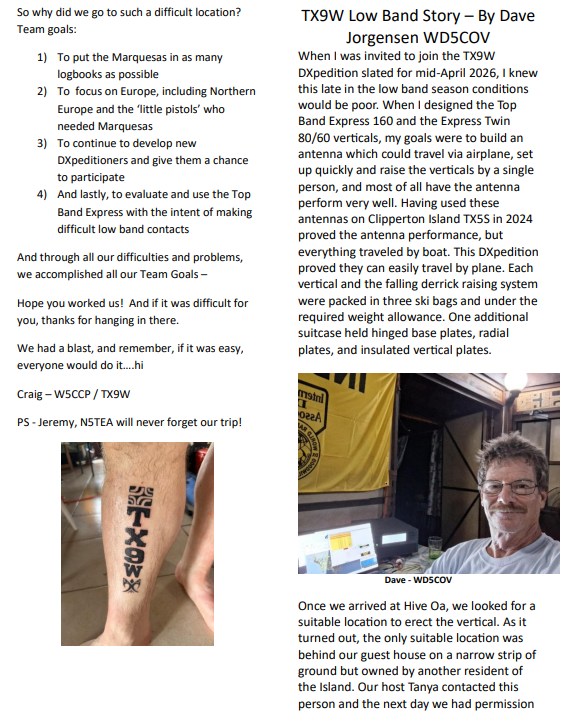
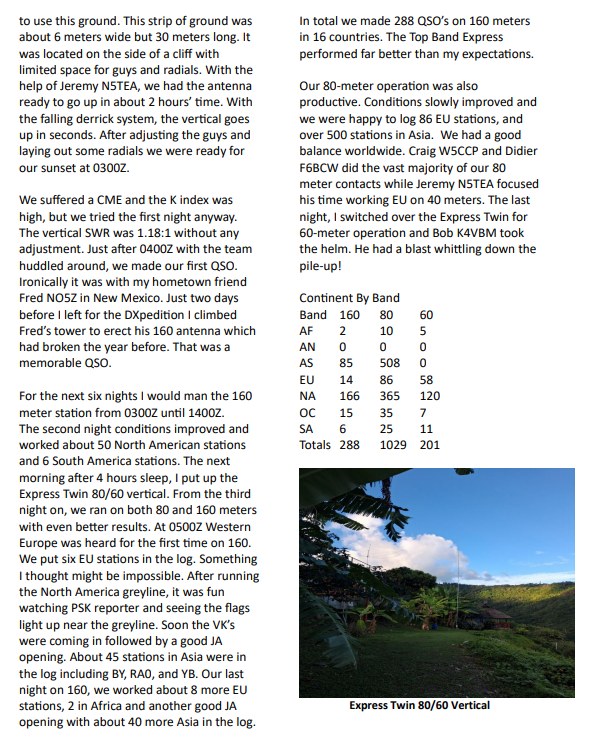
This report appears in the newsletter as page images; the pages are reproduced below. They can also be read in the original PDF.
Bouvet Island 3Y0K Trip Report
Bouvet Island is considered the most remote island on earth, located approximately 2500km southwest of Cape Town, South Africa. The island is approximately 49 square kilometers with 89% glacier coverage. It is located at 54°25′S, 3°20′E https://npolar.no/en/themes/bouvetoya/
After the 2023 3Y0J effort, Ken, LA7GIA began planning for a return visit to Bouvet. Not until August 17, 2024, when I saw a Facebook post that the 2026 3Y0K DX’pedition group was soliciting for team members, did I decide to make an email inquiry – nothing ventured, nothing gained. I received a reply from Cezar, VE3LYC who provided a brief overview of the Bouvet and Peter 1 projects, time-frames and financial commitments and a questionnaire.
After a Zoom meeting with Cezar and consultation with my friends N8CC & W8JRK, as well as my family, on August 25 I informed Cezar that I would be interested in joining the DX’pedition, and later that day I signed the Bouvet Team agreement.
In early December, Ken provided me the 2023 3Y0J gear list, and I began purchasing my trip gear, taking advantage of holiday sales and veteran discounts wherever I could. I worked on evolving and refining the gear list throughout 2025.
As time passed, I prepared various procedures for waste, toilet usage, fuel handling and of course the team gear list. On April 30, 2025 I took my first trip to Oslo, Norway to meet the team and begin preparations for the trip. During our workshop we spent time bonding, learning how to erect the tents, performing some inventory of items and testing the freeze-dried food. We spent time packing all the generators and assembling crates. There was enough time to tour Oslo with a few team members before returning home on May 5th. Right afterwards, I booked my flights and hotel for the September workshops. However, little did I know at that time how my role on the team would change.
On May 13 2025, Ken advised me via email that Alan, EA3HSO, had decided to leave the team for personal reasons and asked if I would be willing to backfill his position on the Leadership Team. We spoke on May 19 about the role, responsibilities, and expectations of being on the Leadership Team. After careful consideration I agreed to accept responsibility as the primary interface with the helicopter company, and logistical coordination in Cape Town prior to our departure.
The summer of 2025 was spent working with the other members of the Leadership Team – Cezar VE3LYZ, Adrian KO8SCA and Ken LA7GIA – on a multitude of logistical and planning topics. I also began working with Paul, ZS1S, who resides in Cape Town. Paul graciously volunteered to be our local contact / logistics hub and his assistance was invaluable. Our first project together was sourcing the generator fuel pump system. We were successful working with a company based in Johannesburg and Paul stored the pumps until our arrival.
I arrived in Oslo on September 11 for the September workshop. A group of team members were in Oslo a few weeks prior, but I was unable to join them due to a volunteer commitment in Guatemala that week. The final container packing was completed by the September group a day early. The final contents were inventoried and weighed, then the container closed for its trip to Cape Town. I returned home on September 15.
After the workshop, there remained significant work to do for the final preparations of the DX’pedtion, with the focus on the vessel, helicopters, Cape Town preparation and on-island activities. I was chosen to attend a small workshop in Iceland for a long weekend in November. There I worked with our two guides and another team member to learn the ins and outs of glacier hiking. It was a memorable experience spending 2 days on an ice glacier learning the proper techniques for glacier hiking.
Upon returning from Iceland, my focus switched to Cape Town. I had the pleasure of working closely with Paul, ZS1S, and receiving his counsel on how things moved on the ground there. I further worked with two very professional companies supplying the helicopter and harbor logistics. Many messages, calls, and emails were exchanged as I worked with these teams to coordinate helicopter logistics & issues, container delivery, fuel procurement, supply procurement, hotel accommodations, local transportation and harbor immigration. I never imagined in my years as an Air Force technician, nor an Electrical Engineer that I would be so intimately involved in coordinating such critical activities for a sub-Antarctic expedition! The requirements and business are very complex and so very different from a lifelong role in electronics.
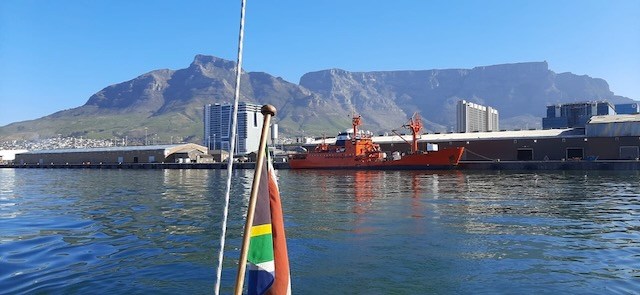
Everything was prepared for a February 1, 2026 departure, but then the vessel was delayed for ongoing maintenance in Las Palmas, Grand Canary Islands. I decided to keep my departure of January 24 and spend an extra week in Cape Town. Ultimately, due to a major winter storm, my flights were canceled. Then I learned of an additional week vessel delay. The delays caused all our near-term planning to be moot while we waited for a new vessel arrival in Cape Town.
I finally departed Detroit on February 11 and was greeted in Cape Town by Paul ZS1S, Donato IK2EGL, Gudmi TF3SG, Max N4ML, and Alex DL2ALY when I exited the customs area. My first trip to South Africa had begun!
Paul was an amazing tour guide. After shuttling us to meetings with our freight handling company and the lead helicopter pilot, he showed me around some of the Cape Town sights on Friday afternoon and Saturday. On Sunday, Paul took a group of us to Cape Agalus, the southern most point in Africa. The weather was great, and we met several local hams along the way and for lunch. We were all pretty tired by the end of the day.
Unfortunately, by the end of the weekend, we had lost several team members due to illness or the inability to reschedule around the 3 week vessel delay. Regardless, we were still determined to press ahead and activate Bouvet.
Vessel boarding day arrived quickly on Wednesday. Three years of preparations were coming to fruition. The container was loaded, the helicopter secured on deck and local supplies were loaded on the vessel. The team finished moving in on Thursday, settled in their cabins and began the necessary work of moving items out of the container to the rear of the vessel, and securing them for the voyage. Most of us had no idea of the rough seas we were about to experience!
In spite of the naysayers and Internet expedition experts, we departed Cape Town early in the morning of February 21. The team was greeted with 3 meter swells not far from Cape Town, which provided a taste of the week ahead.
During the voyage some of team met daily with the helicopter pilots to assess and revise the landing plans, loading strategies, and safety protocols. The radio team met daily to review plans, discuss priorities and safety. We all practiced donning survival suits.
As we neared Bouvet, the winds and seas became so bad, the vessel was required to slow down to 4 knots of speed and zig zag their course in order to reduce the stress on the helicopter. Swells were about 6 meters and winds were on the order of 30 to 40 knots. It was rough for everyone!
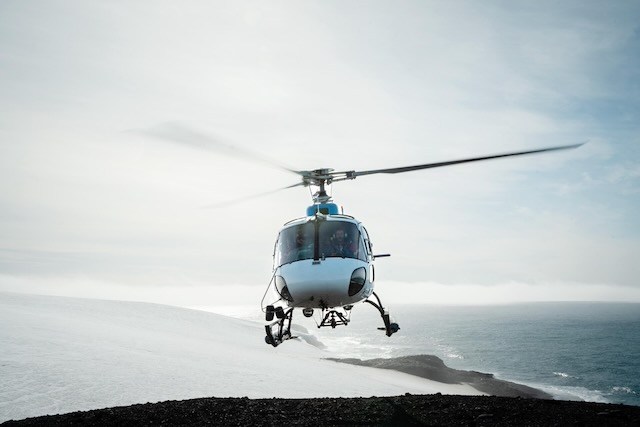
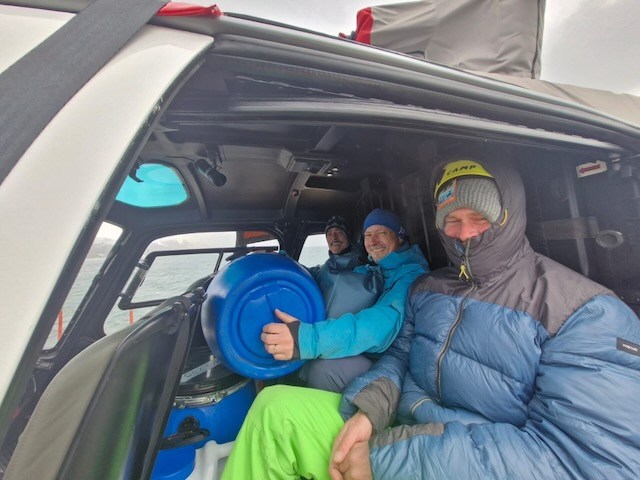
We arrived at Bouvet on Friday February 27, 2026. The island hid in the fog for several hours, but eventually decided to show itself to us. The excitement was building! Our guides, the vessel captain and the helicopter team agreed we were likely to have our first weather window the following day. We packed the helicopter for the initial recon flight of 3 persons.
Saturday afternoon arrived and the winds switched and calmed to some degree. The vessel positioned itself in the protection of the island where the seas were calm enough to commence operations. The helicopter team installed the blades and began pre-flight checks. They started the helicopter and took an initial flight to ensure all systems were ready for Bouvet operations. There was a brief landing on the helideck, and the recon team boarded for the first flight. I was excited!
On our way to the to what would become our campsite, we quickly realized that our “Plan B” and emergency evacuation plans were at high risk. There were hundreds, if not thousands, of seals on the beach. Three years ago the beach had been empty and supported the 3Y0J landing. The amount of glacial receding since that time was incredible. We pressed ahead, and found a suitable landing spot we would use for the next 2 weeks. What was once a 2-camp operation, was now a 1-camp operation at the NA focus location.
We brought 3 cargo flights and 4 more people on the island with enough time to erect 2 tents and grab a delicious meal of freeze dried food and hot water boiled on a small paraffin stove.
Our first full day was in retrospect the scariest of them all. We had gale force winds up to 50mph, the rain was horizontal and the tents rattled and shook the entire time. The rain was penetrating the canvas and the rattling frame dripped with water. James W7EY and Alex DL2ALY decided to brave the elements, set up a dipole between two ridges with a 2.5 meter high feed point, and made the first QSO’s as 3Y0K. Throughout the day, as propagation changed, Alex and James made adjustments to the dipole so that we could switch bands, ending up with a 40M configuration that Cezar VE3LYC operated through the night.
The following day, Monday March 1, the weather calmed enough to commence operations from the vessel. The rest of team was brought to the island as well as most of our supplies. Three more tents were installed, as well as a couple of smaller tents. The tents were not only reinforced with large boulders we collected, but also soil. The addition of soil on the tent skirts greatly increased their stability and proved invaluable later on in the expedition when we faced 55-60mph sustained winds. In addition to the new tents, a radio tent consisting of 5 positions was established and first “real” antennas were installed – 40M Vertical, 20M Vee, 160M Vertical.
As the week progressed, the antenna configurations continued to grow. The team eventually ended up with monoband yagis on 10,15, & 20, two 12/17 duoband yagis, 40M vertical, 40M Vee, 30M Vee, 80M Vertical, and 160M Vertical. The team members operated in 18 hour shifts, 6 hours on the radio 12 hours off. The off time was typically used for eating, sleeping, and working. Due to the constant winds much of the “rest time” was spent repairing and reinforcing the antennas.
The wind challenged of all our antennas, and visually the spiderpoles seemed under the biggest assault, but they persevered. Eventually, the 18M high, 160M vertical’s top section broke. Vadym, UT6UD retuned the antenna to accommodate the shortened height during the daytime and was ready for more Q’s at night. In general, the majority of our antenna issues were due to installation that occurred in rain, snow, and high winds with cold hands. The team likely didn’t tie a knot well enough, or tighten down nuts as they should have. It was extremely challenging, and took several people to raise a single antenna, fighting the elements the entire time.
The pileups were fierce. The bands always seemed to be open to Europe. This made it challenging to work openings to other parts of the world “under” the EU pileup. Our operators worked diligently to work through some of the loudest stations as quickly as possible, all the while working the areas that had limited band openings. Sometimes the pileup was cooperative, sometimes it wasn’t.
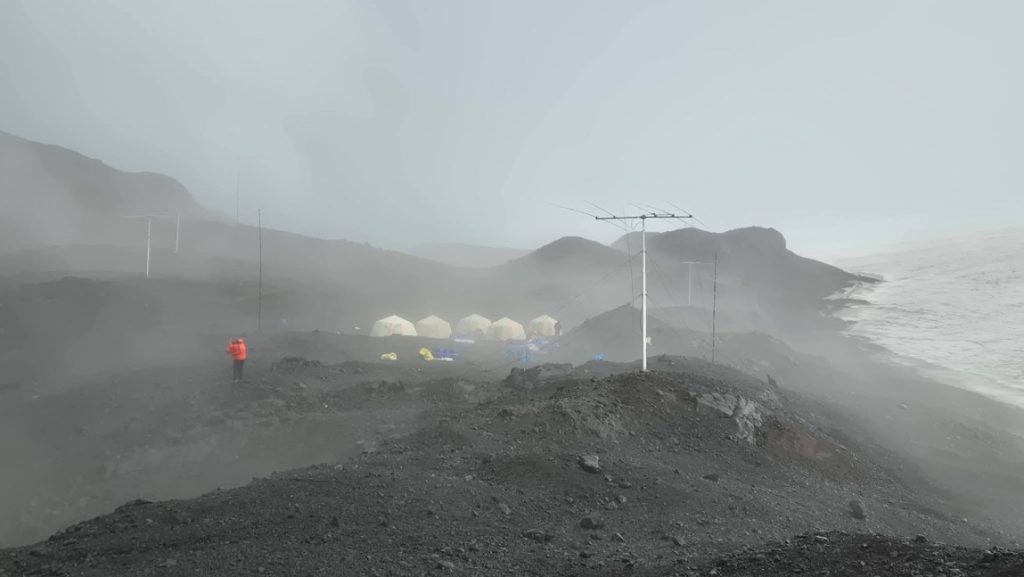
The weather wasn’t all bad, just mostly bad! We had time enough for 1 circumnavigational helicopter flight around the island the second day of operations. On that flight we observed that the Norwegian weather station that had already been installed most recently in 2012, had one leg hanging over the cliff! Generally speaking, the calmest weather was in the morning and afforded a few beautiful sunrises. Our longest weather window occurred on the Saturday, one week after our arrival. The black surface of the island radiated the sunlight and it almost felt like summer! Several team members found an ice melt pond and took a “bath.” It was great to clean up after a week of wearing the same clothes! Every team member had a chance to take a helicopter ride around the island. Unfortunately, the northern part of the island was fogged in, but the experience was still amazing! Even landing near Mount Olaftoppen was incredible for the private tourists. Unfortunately, all good things must come to an end and we were later greeted with more wind and pelting snow.
As the week progressed, the team was in a groove, and so was the weather. We barely had enough of a weather opening for two re-supply flights on the following Tuesday that included a pizza delivery from the vessel. The pizza was a welcome respite from the daily freeze dried food routine!
The guides and helicopter teams began looking for further additional weather windows. It became evident that the weather wasn’t looking good. Even as potential weather windows looked possible, they later disappeared. Weather forecasting on Bouvet is guess work at best, and no more than 24 hours in advance!
As the antennas continued to take a beating and repairing them more and more difficult, a Saturday and Sunday weather window looked possible for extraction. The team started to prepare for departure on Thursday and Friday, securing and packing everything possible that didn’t impact radio operations. When Saturday arrived, the window finally opened for us. We put packing in high gear and began teardown in earnest, only leaving 4 radios and antennas available in the social tent. We eventually had 11 helicopter flights, returning all but 7 people and about one quarter of our overall gear on the island.
The team onboard the vessel quickly stowed and secured the cargo as it arrived and everyone was grateful for a shower and hot meal on Saturday night, while our 7 colleagues worked to complete the rest of the camp tear down, and ceased radio operations with a total of 102K+ QSOs.
Sunday arrived, the vessel moved around the corner of the island and operations commenced again. The remaining team members and cargo were removed as part of an additional seven helicopter flights. Those 7 team members quickly showered and changed their clothes while the rest of the team worked to secure all the cargo.
A huge storm was on the way and we had to hurry. We managed some team photos and as we completed them, the captain urged us to get below deck so we could leave. Otherwise, we were looking at an additional two and a half days of waiting at Bouvet for the weather to improve. Everyone breathed a sigh of relief and we celebrated our accomplishment together.
The voyage back took 6 days. The first 3 days were very rough. The storm we manage to skirt was huge indeed and we were all relieved to be headed back. There was no way to know when we would have had another weather window, and given the ferocity of the storm, if the tents would have held up. After clearing the storm, the team was treated with some incredible sunsets at sea.
We arrived in Cape Town at sunrise on Saturday March 21, 4 weeks after we had left. The DX’pedition was coming to an end and everyone was ready to go home. Upon docking, the radio team worked hard to pack the container for it’s shipment to Texas. The helicopter team prepared the helicopter for a return flight to Cape Town International Airport, and our support team was ready for stable footing on land!
The local ham club, ZS1CT, hosted a special reception for the team on Sunday at the Royal Cape Town Yacht Club attended by nearly 60 people. We are grateful for their support and hospitality.
The DX’pedition to Bouvet took an incredible amount of planning and courage. Ken, LA7GIA, spent years meticulously planning each piece of the puzzle. That planning was not just radio. Considerable attention was placed on team safety and survival. The skilled pilots from Ultimate Aviation were essential. Without them we would never had gotten on and off the island. These pilots were an integral part of the team. They researched our expedition, and integrated themselves in all aspects of operational success. Securing a vessel capable of operating in such undesirable conditions, without any issues was another key element, along with an experienced and skilled captain.
Another essential aspect was Harbor Logistics. We were very fortunate to work with a skilled team at Meihuizen Freight. They have extensive experience supporting Antarctic expeditions out of Cape Town, and they know all the ins and outs of how the harbor operates. On more than one occasion they broke down barriers for us and were a valuable part of our team. The Cape Town logistics and support we received from Paul ZS1S, Allan ZS1LS, and Robert ZS1FF were incredible. Paul in particular supported the DX’pedition for well over a year. It wasn’t unusual to have multiple calls and emails daily with Paul as he coordinated the logistics and contacts we relied on in Cape Town. We were truly fortunate to have Paul as a member of our team.
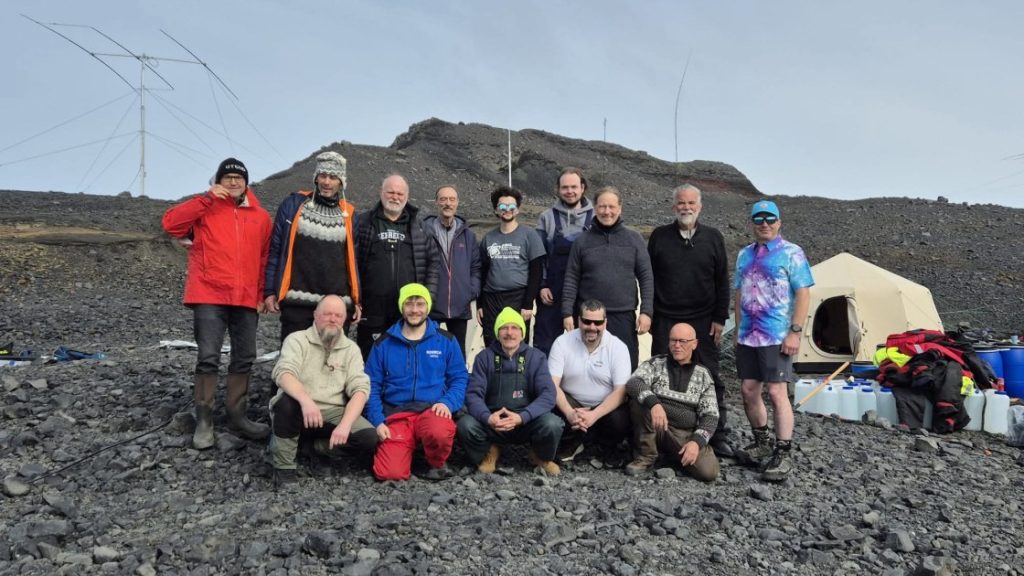
To the sponsors who provided equipment and support, as well operators who worked us – Thank you!
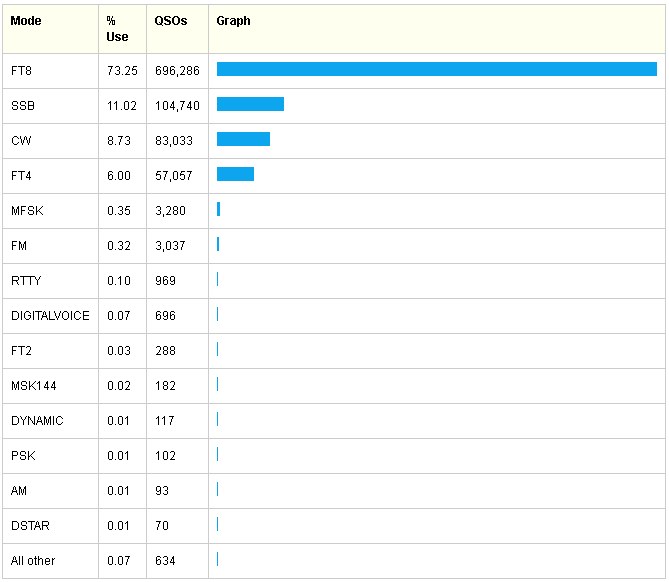
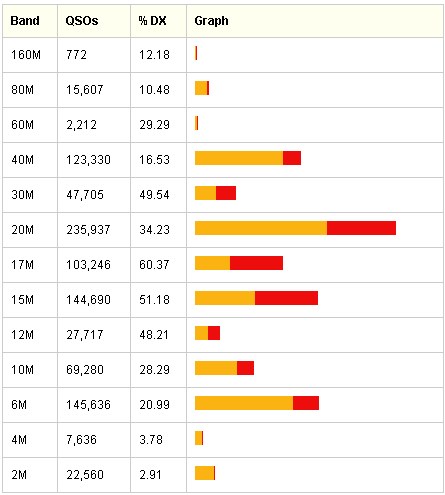
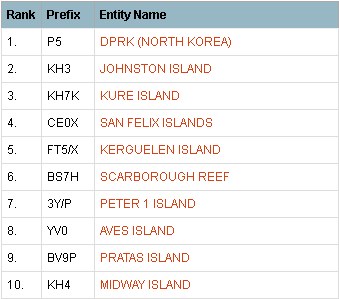
Club Log DX report
Youth on the Air
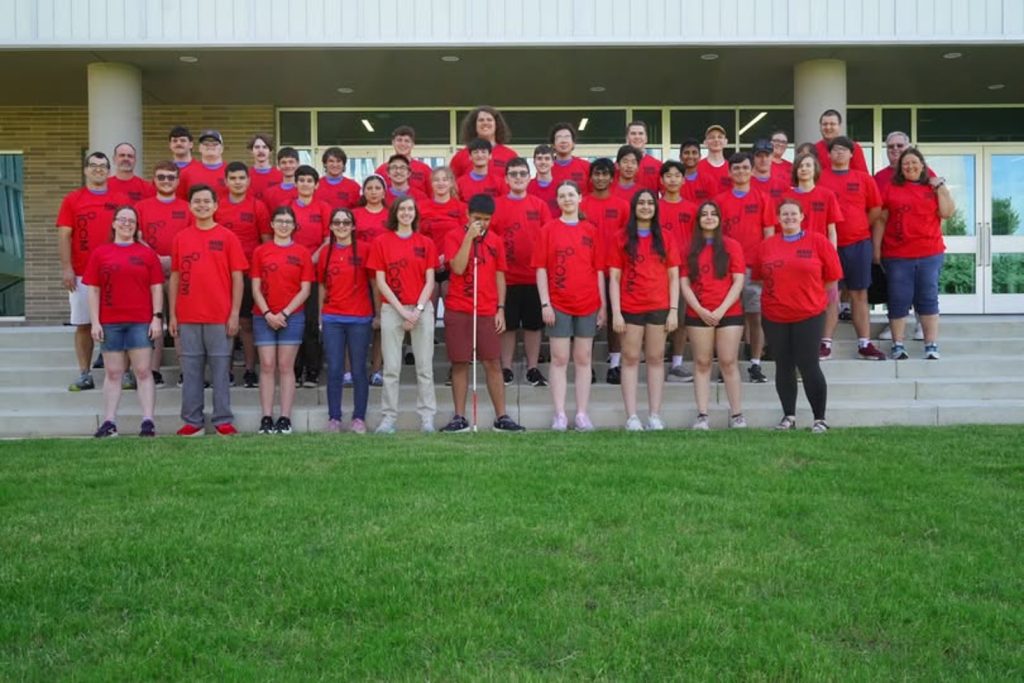
INDEXA provided the Youth on the Air (Region 2) Campers all with a Four-Year Youth Membership during the 2026 YOTA Camp in Huntsville Alabama.
Our supporters




DXers have a choice! Get a free two week trial of The Daily DX and The Weekly DX and decide for yourself which fits your needs for informing you of all the DX news! Email bernie@dailydx.com or go to www.dailydx.com.
The Daily DX, 3025 Hobbs Road, Glenwood, Maryland 21738 · Phone 410-489-6518
From the Editor
If you have an article that you would like to share with INDEXA please pass along no later than September 1st for Fall 2026 Issue.
73,
Steve KI4KWR
KI4KWR@gmail.com
The INDEXA Newsletter is a quarterly publication of the International DX Association. INDEXA is a 501(c)(3) non-profit organization.
Editor & Publisher
Steve Molo, KI4KWR
PO Box 6372, Huntsville, AL 35813 USA
KI4KWR@gmail.com
Distribution & Circulation
Paul Ewing, N6PSE
3052 Wetmore Dr, San Jose, CA 95148 USA
secretary@indexa.org
Membership application