Fall 2026 · Issue 150
Helping to Make DX Happen Since 1983
In this issue
Message from the President
As fall approaches, it is once again time to turn our attention to contest season—and, of course, DX season. While we all know that DX can be worked any day of the year, there is something special about the fall and winter months. Propagation improves, the major contests return, and some exciting DXpeditions are already on the calendar for the coming months.
For those of us who enjoy chasing DX, now is the time to make sure the station is ready. This may be the final opportunity to get antennas repaired or improved, check feed lines and connectors, test amplifiers and radios, and make sure everything is working before the major DXpeditions begin. When a rare entity goes on the air, there is nothing more frustrating than discovering that your station isn’t performing the way it should.
I recently had the opportunity to attend and present at W9DXCC in Chicago. It was a very well-attended event, and INDEXA was proud to have a table and a presence there. It was a great opportunity to meet old friends, make new ones, and talk about the work that INDEXA continues to support around the world.
The following week, it was time for W4DXCC, where INDEXA was again represented. It is encouraging to see these DX conventions returning after the long slump caused by the COVID years. These gatherings are an important part of our hobby and provide something that is difficult to duplicate anywhere else.
Of course, Dayton remains the largest gathering on the calendar, but W9DXCC and W4DXCC give us additional opportunities to come together specifically around DX. The presentations and technical talks during the day are only part of the experience. Some of the best conversations often happen in the evenings, in the hospitality suites, restaurants, and informal gatherings where DXers from around the country—and around the world—can simply sit down and share stories, plans, and ideas.
That sense of community is an important part of what makes amateur radio special. DXing is certainly about the contacts we put in the log, but it is also about the people behind those callsigns, the expeditions that make rare entities available, and the friendships that develop along the way.
So, as we head into another exciting DX season, take a little time to get your station ready. Check those antennas, clean up the shack, test your equipment, and make sure you are prepared for the next rare one to appear on the bands.
And if you have the opportunity, attend one of the DX conventions. Come to the presentations, visit the tables, support the organizations that support DXing, and stay for the evening gatherings. You never know who you might meet—or what DXpedition plans you might hear about over a cup of coffee or a nice bottle of Caribbean Rum!
On behalf of INDEXA, I look forward to seeing many of you on the bands this season—and hopefully at one of the upcoming DX conventions as well.
73,
Otis, NP4G
President, INDEXA
Future DXpeditions supported by INDEXA
INDEXA is proud to support the following future DXpeditions in 2026 and early 2027.
Christmas Island, VK9XY
November–December 2026 Youth DXpedition
St. Lucia, J62K
March 2027 (support from the Next Generation Fund)
Peter I, 3Y0
February 2027
N6PSE visits the Tokyo Ham Fair 2026
I am just back from the Tokyo Ham Fair, held August 29th and 30th at the Ariake Gym-Ex in Tokyo. It was rather hot and humid in Tokyo but fortunately, Gym-Ex in the Ariake district is surrounded by Tokyo Bay and was somewhat comfortable and air conditioned.
Tokyo Ham Fair is a big event in Japan and all of the Japanese amateur radio vendors and Japanese amateur radio clubs are represented. I was told that attendance was over 30,000 people. All of the new products and services were on display. I saw products that are not yet available here in the USA. I also noted that Japanese prices when converted to USD were about 15% lower than our prices here in the USA. It was fun to see new gear revealed at THF including ICOM’s new IC-7110 all band/all mode radio. There was a huge Get on the Air operating area with at least ten operating positions that were kept quite busy.
What impressed me most about the Tokyo Ham Fair was the level of excitement and passion as displayed by the JA amateurs. They absolutely love amateur radio and it shows! At Tokyo Ham Fair, there were various presentations and there were Contest and DX Dinners in the evening. I enjoyed hearing about recent DXpeditions at the nearby DX Forums.
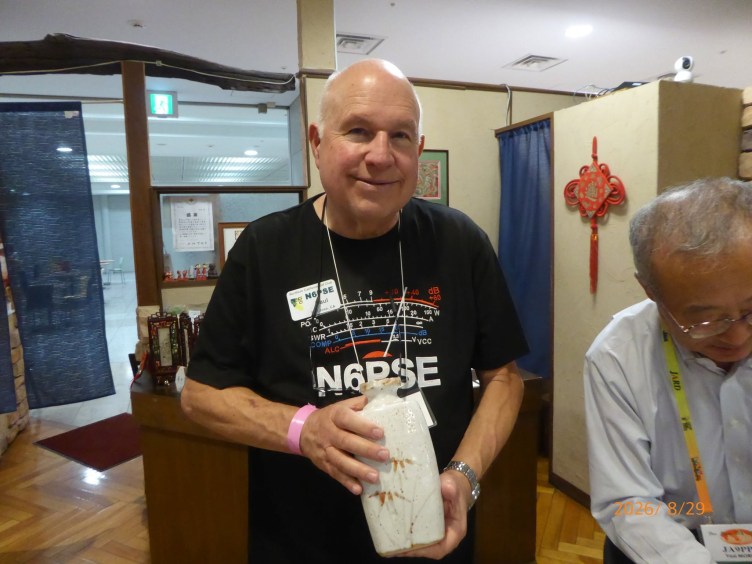
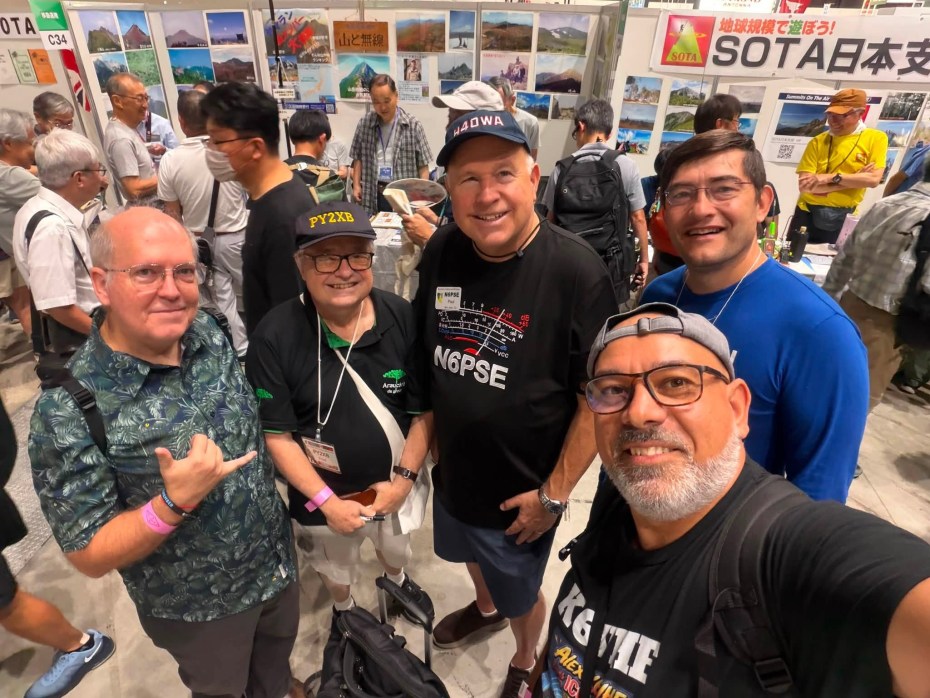
If you decide to attend THF, I recommend staying at the DoubleTree by Hilton Ariake or the nearby Sotetsu Grand Fresa Hotels. The Gym-Ex complex is a short five minute Taxi/Uber ride. Downtown Tokyo is a 20 minute train ride from Ariake. You might also enjoy visiting the Akihabara district of Tokyo, known for its many ham radio shops and electronics stores.
Having attended Dayton Hamvention, it was interesting for me to be able to compare and contrast each of the events. Hamvention is more spread out and weather can be a factor. THF at the Gym-Ex arena is all contained in one large building next to a train station. They actually had various food trucks inside the arena to feed the attendees.
All in all, Tokyo Ham Fair was an outstanding event and I really enjoyed my visit. I highly recommend it.
Paul N6PSE
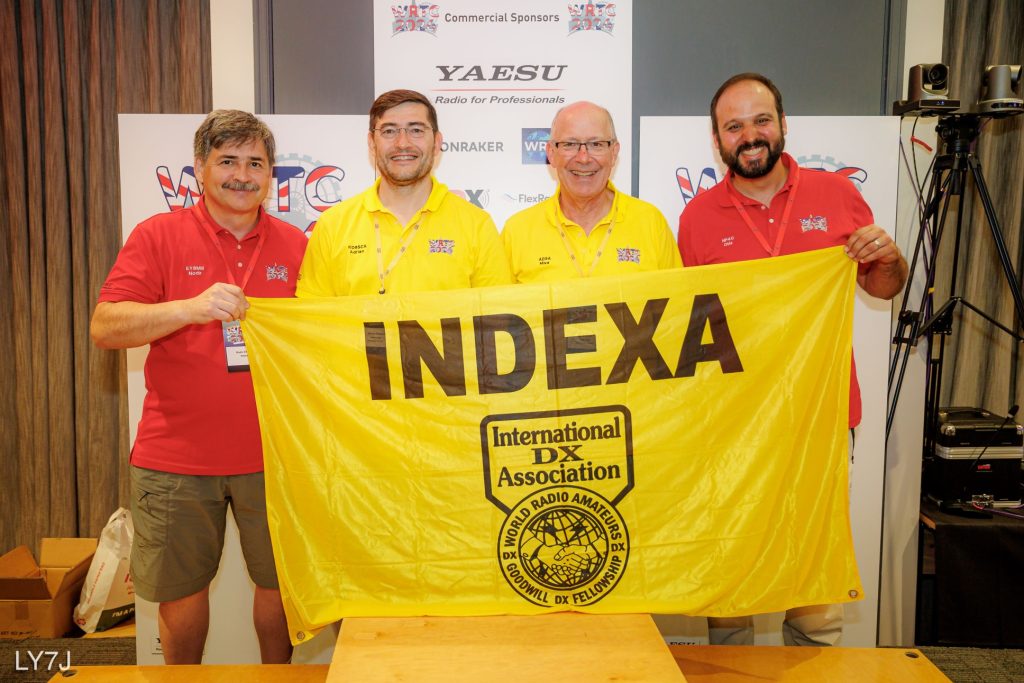
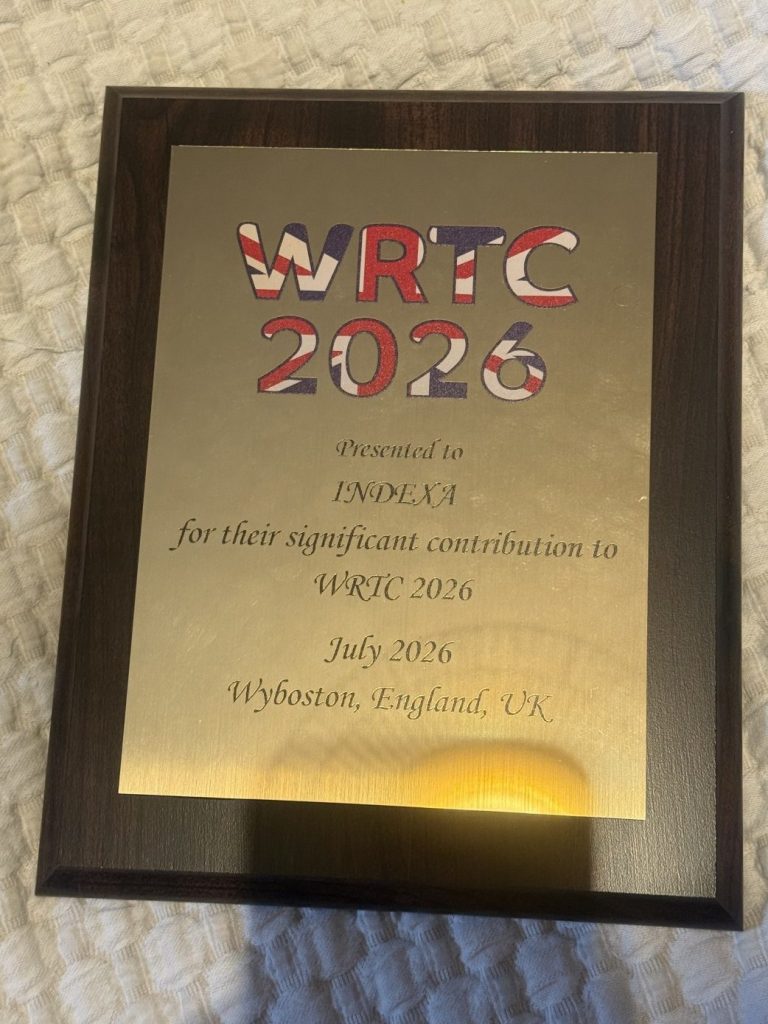
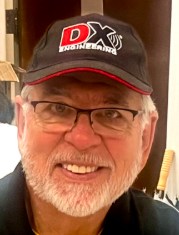
INDEXA leadership at WRTC 2026 in England
QRN from the Treasurer
INDEXA’s calendar fiscal year runs from October 1 to September 30 and so as we close out our FY2026, I would like to share a couple things with you to let you know how YOUR organization is doing. I will say at the outset that I am quite pleased in the direction INDEXA is going and, based on our financials and membership participation, I am equally optimistic about the future direction of our organization.
First of all, for FY2026, INDEXA saw a slight “bump” in membership numbers following the previous year, where we witnessed a roster decline by about the same amount. Currently, INDEXA membership stands at nearly 1,200 members with 225 DXers representing 53 different DXCC entities outside of the U.S. The International DX Association truly is “International” in scope and participation in both its membership roster AND the officer and directorship positions guiding our organization.
Like other aspects of our hobby, please know that your board of directors recognizes the very future of our existence and future success hinges upon our ability to increase the youth involvement within the art and as such, has proactively implemented two initiatives promoting youth participation and involvement.
The first, was the establishment of INDEXA’s “Next Generation” Fund– a response to the desire and wishes of one of the stalwarts of INDEXA and truly someone who was at the top of this hobby and DXpeditioning in particular- Bob Allphin, K4UEE (SK). Bob wanted to leave a legacy following on heels of his passion for and legendary career in DXing. With the help of our friends in the Southeast DX Club, Bob’s “home club” in the Atlanta, GA area and through the actions of Bob’s ever supportive and charming wife Mary, we were able to establish the “Next Generation Fund” – dedicated to providing youth DXpedition support through our grant process.
In FY2026 INDEXA earmarked 18 total grants to DXpeditions meeting the criteria necessary through our online application process. You should know that this has been the most-ever DXpeditions supported by INDEXA in any given year. Five of these grants included support for youth participants through our “Next Generation” funding. And of course, we hope to see this number increase in the future as additional resources grow this fund and youth participation evolves. Please know that we have somewhat expanded the definition of “Youth” within the realm of DXpeditioning here in this regard as INDEXA will give more consideration to “younger” DXpedition participants who are 35 years of age or younger. As mentioned, we look forward to growing and further promoting youth involvement in DXpeditioning in the future and appreciate all of you who have been generous donors designating your donations over and above your annual dues, in support of our “Next Generation” effort.
The second action taken by our board of directors was to stimulate and encourage actual youth membership in INDEXA itself. This was an action heavily influenced and supported by Lou, N2TU (SK) who was a longtime board member and chairman of the organization. Through his encouragement, the board of directors opened 4-year complimentary youth memberships to any interested ham or potential ham who is 25 years or younger. While we have seen some growth in our younger membership demographics, I believe we have barely scratched the surface in bringing young hams, potential DXers perhaps, into our association.
INDEXA has successfully partnered with Youth on the Air (YOTA) to some degree in this effort but hope we can continue building on this initiative to expose and educate the younger hams to INDEXA’s longstanding outreach and support to DXpeditions.
With this in mind, I want to simply close with an appeal to each and every INDEXA member and even non-member DXer reading this– If you know of a young person, ham or potential ham; DXer or potential DXer or DXpeditioner or potential DXpeditioner, 25 years or younger who you would like to nominate for a 4-year membership, please reach out to me… or better yet, let them know of this opportunity and have them contact me. Why would they not want to be a member of this great organization that has been supporting DX for over 40 years?
Frankly, I think we “Old Timers” should continue to do more to accept and encourage the younger hams to come into the fold. DXing is considered an “Exclusive” segment of the hobby but I sense that we sometimes literally, yet perhaps innocently and unintentionally “Exclude” those who don’t measure up to our standards. I feel we can and should do more to increase our ranks and bring the younger hams into this DX-inclusive tent that we know and love as DXing.
I would really like to count on you, dear INDEXA member to be a messenger, an ambassador, a DX Elmer – let the younger hams you may associate with know what is available whether it be the benefits of joining INDEXA or how they might be able to get involved with a local DX Club. I sincerely believe this is the only way we will see our ranks grow, not only for the INDEXA organization but perhaps more importantly, so DX will live and thrive long into the future with our Next Generation of DXers and DXpeditioners.
73 es DX,
Hal W8HC
Treasurer INDEXA
J62K Youth Adventure Announcement
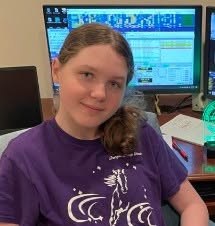
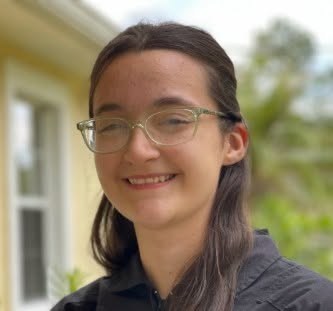
Hope Lea, ND2L, and Haley Pendell, KE2EVX
INDEXA is proud to support the J62K Youth Adventure for the 2027 CQ WPX SSB Contest. These two ladies I had the chance to see operate at the 2026 YOTA Camp in Huntsville, AL. Knowing Hope Lea (ND2L) for many years already but Haley Pendell (KE2EVX) was quiet in the beginning of camp but at the end of the week sprouted and was always in the Shack at Alabama School of Cyber Technology and Engineering (ASCTE) during the week and eager to learn and to operate.
This is a high priority in my passion of the hobby; youth involvement and will always support them any way I personally can. Like Hal W8HC made in the previous article; this is our future and we need to support them and keep the passion alive.
Steve KI4KWR
INDEXA Director/Editor
Past participants
- 2026: Kylee Shirbroun (K0KYL) and Seth Jones (NU1D)
- 2025: Violetta Latham (KN2P) and Leon Hellmich (DL3ON)
- 2024: Grace Papay (K8LG)
3X3A from Guinea to the CQ DX Hall of Fame
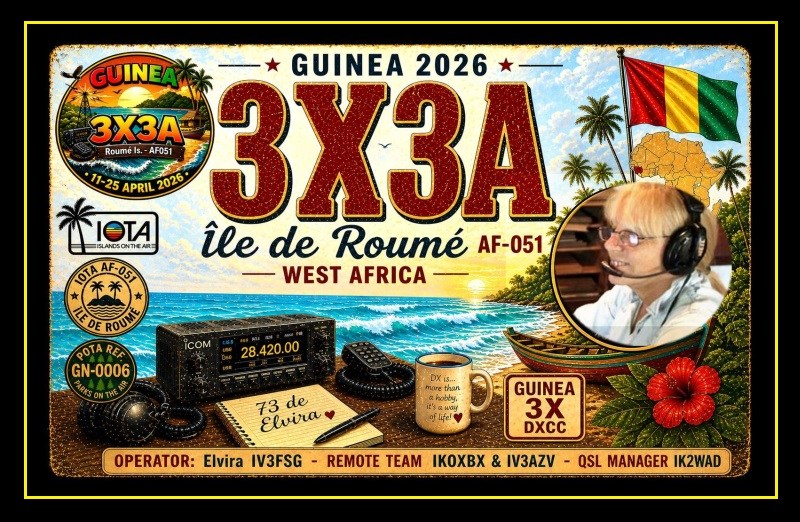
The Roume Island Expedition and Guinea’s debut on 60 meters
A station on the rocks of Roume
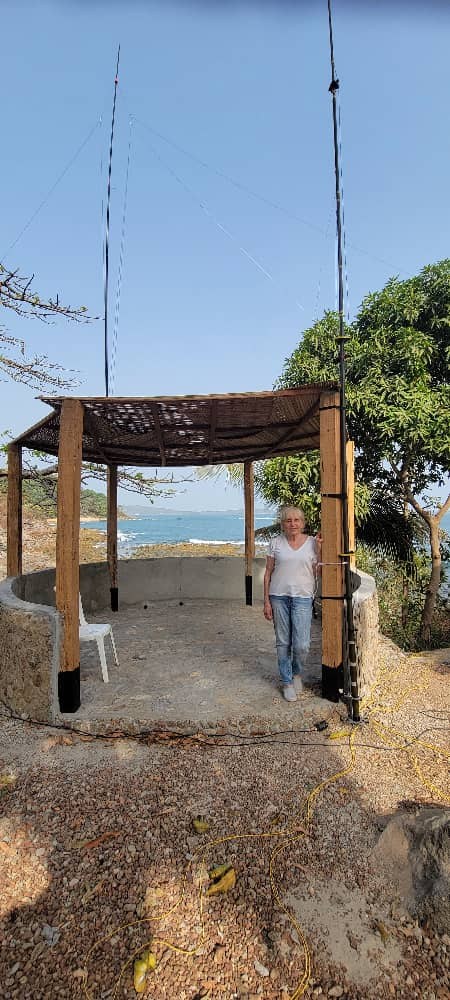
The most important achievement of 3X3A was giving hams their first opportunity to work Guinea on 60 meters. Operating from Roume Island in the Îles de Los archipelago, IOTA AF-051, I finished the expedition with 40,641 QSOs and just 239 duplicates. Behind those numbers were a generator that had to keep running, antennas overlooking the Atlantic, and thousands of DXers waiting for an opening. That is the experience I would like to share with INDEXA members, especially those who listened for and called 3X3A from North America.
The sound I remember most clearly is the ocean. It was there while I assembled the station, worked the pileups, and tried to get a few hours of sleep. I flew from Trieste to Conakry on Ethiopian Airlines, then continued to Roume by boat. By the time I started laying out the radials, the expedition was already underway, even though the call sign was not yet on the air.
Being the only person on site means taking responsibility for everything. Installation, maintenance, and unexpected problems all fall to the same operator. If the generator quits, I have to leave the radio. If an antenna develops a problem, I have to fix it before I can call CQ again. This is demanding, but after many years of operating, it still appeals to me.
That does not mean doing the work without help. Francesco, IK0XBX, served as the expedition’s pilot and helped with planning, propagation studies, and operating priorities. During the operation, he monitored the logs and band openings. He and Mauro, IV3AZV, also operated the station remotely, primarily on CW, allowing me to rest while contacts continued. I was alone on the island, but there was a team behind the operation.
Obtaining the permits took time and patience. Shortly before departure, the Italian Embassy contacted Francesco about risks in parts of Guinea and the precautions to take. Those concerns deserved serious attention. Once I reached Roume, however, I found a calmer setting than I had feared, with a favorable antenna location just a few yards from the ocean.
During planning, we agreed to keep unnecessary duplicate contacts to a minimum and maintain an accurate log. A needless repeat QSO takes time that could give another station its first contact. With a small station and limited resources, that decision directly affects how many people get a chance to work the expedition.
Antennas and Power Off the Grid
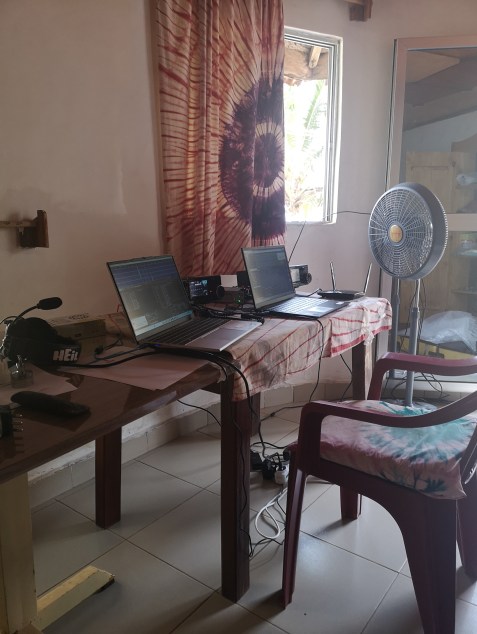
The station used two Icom IC-7300 transceivers and two laptops for logging and digital operation. I primarily used MSHV for FT8 and FT4, which proved particularly useful during openings to Asia and North America. I also made a deliberately limited number of FT2 contacts to try this new digital mode under actual DXpedition conditions.
Log updates on Club Log let callers check their contacts promptly. When a DX signal is weak or propagation is marginal, seeing a QSO in the log helps prevent repeat calls made out of uncertainty. Log checking was therefore part of our operating strategy as well as a service to the callers.
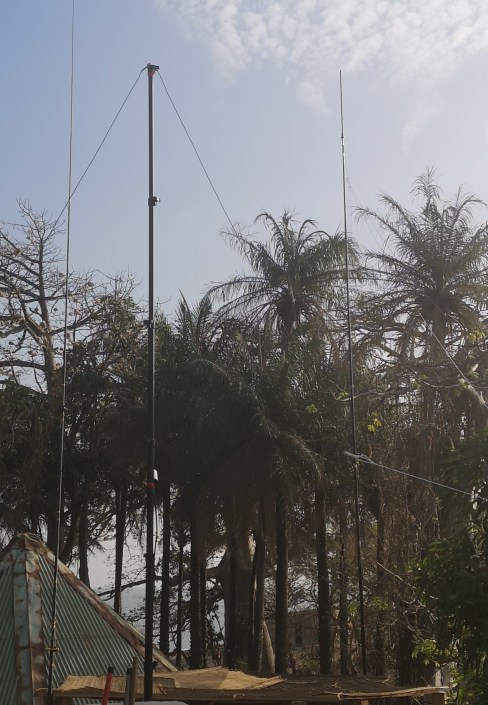
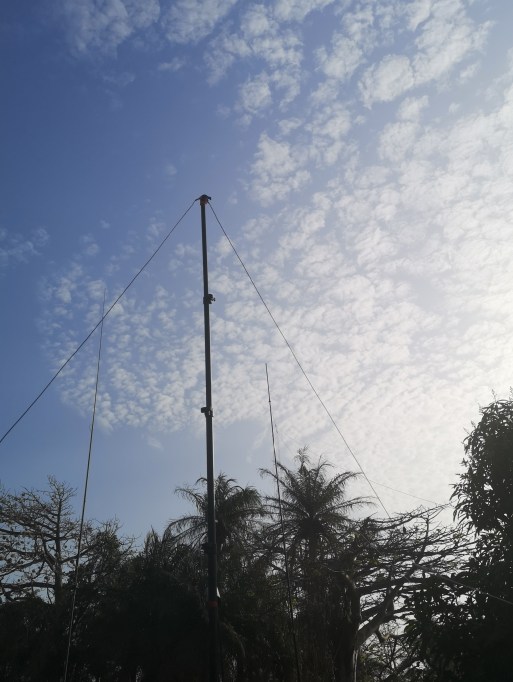
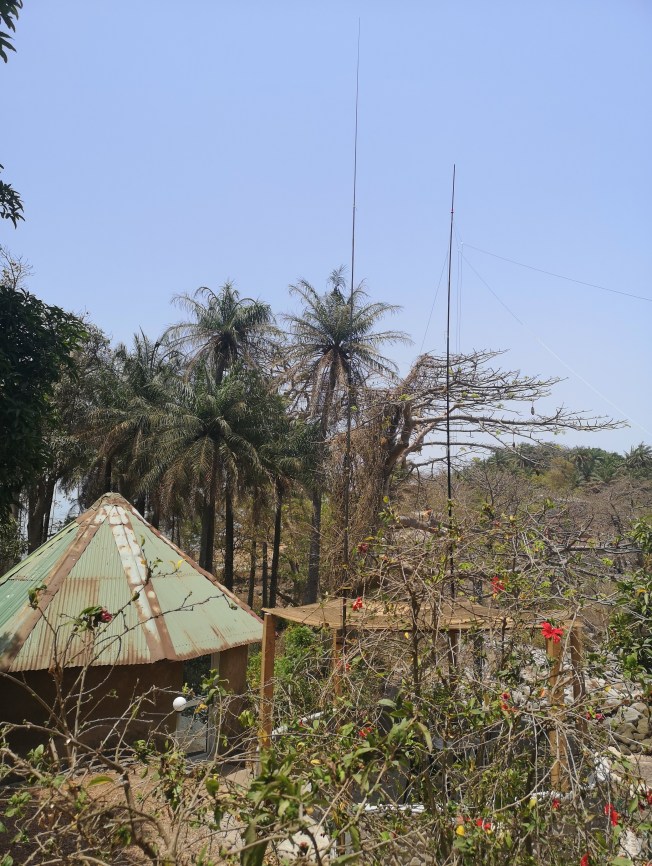
The HF antennas included a multiband DX Commander and an inverted L, which I also used on 160 meters. A single-element delta loop covered 6 meters, and a separate dipole served 60 meters. I built that dipole on the island using two radials from the vertical antennas. It was a simple solution that made one of the expedition’s most significant activities possible.
The available antenna site was a small burial area that the islanders called the “land of the dead.” It was clear of vegetation and open to the ocean. The young men helping me were uneasy about working there and watched the ground carefully with every step. Before attending to wires and supports, I had to reassure them. The saltwater location produced very satisfying results, particularly on the low bands.
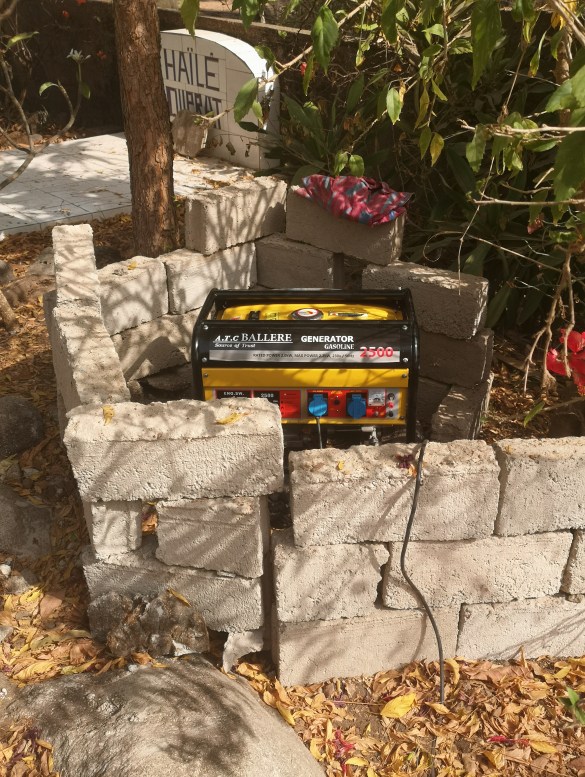
Roume has no electrical grid. A few solar panels provide 12-volt power for essential needs during daylight hours, but my station depended on a gasoline generator kept running around the clock. Before leaving home, I confirmed that my local contact had purchased and brought enough fuel to the island for the entire operation.
When the generator stopped, the pileup ended abruptly. I had to go outside, sometimes in complete darkness, check the fuel, temperature, and connections, and restore power. The callers could only hear that 3X3A had disappeared. At my end, the immediate task was to get the station running again as quickly as possible.
Heat, humidity, and salt air made even simple jobs harder. There was no air conditioning. The small 12-volt fan I could have used during the day generated strong RF interference, so it had to stay off. Giving up some relief from the heat was preferable to making reception worse. Under those conditions, dependable power and noise control mattered as much as the radios themselves.
The first 60 meter operation and decisions in the pileup
The 60-meter authorization came after lengthy technical and diplomatic discussions with the local authorities. It was temporary and experimental, allowing Guinea’s first officially authorized amateur operation on the band. When I called that first CQ, I knew many hams had been waiting specifically for it. The response was immediate, and the pileup remained strong.
For a DXer chasing a new band country, a useful opening can be brief. That was especially apparent during the windows to North America and Japan, which produced some very rewarding contacts. Europe accounted for the largest share of the traffic, helped by geography, but stations from Oceania and South America also made the log. Following propagation was essential to making the most of the available opportunities.
The hardest problem was receive noise, particularly on the low bands. Being away from many household sources of RF interference did not mean every band was quiet. On some frequencies, the noise became especially noticeable after I began transmitting. I suspected a nearby military installation, but I could not confirm the source.
Those conditions reduced SSB operation far more than I had planned. Sometimes callers could hear me, while I could not reliably copy even stations calling with substantial power. Staying on SSB in those circumstances would have increased errors and slowed the contact rate. I therefore devoted more operating time to digital modes and CW.
That remains my greatest disappointment. On SSB, a voice or an accent adds something special to a QSO: I get a sense of the person calling from the other side of the world. I would have liked to offer more opportunities to operators who prefer phone. But my choice of mode had to reflect what I could actually receive and log accurately.
The final log contains 40,641 QSOs, including 239 duplicates, or 0.59 percent. Analysis through Club Log indicates that at least 1,820 operators worked 3X3A for an all-time new one, and at least 9,798 contacts provided a new band country. These are minimum figures from the available analysis, rather than a complete accounting of every caller’s DXCC needs.
Those results explain why we placed so much emphasis on accuracy and limiting duplicates. The QSO total shows how much operating took place; the ATNOs and new band countries show how many needs we were able to fill. For INDEXA members, who understand the work involved in putting a DXpedition on the air, that is a practical measure of what the operation accomplished.
An unexpected email and the next trip
Before I left for Guinea, an unexpected surprise arrived. On April 2, I received an email from Bob N2OO, INDEXA’s Vice President, inviting me to Dayton for the ceremony at which I would be inducted into the CQ DX Hall of Fame. My first reaction was to wonder whether it was an April Fools’ joke. The timing made a prank seem possible, and I had no idea that I had been nominated.
Francesco, IK0XBX, together with I0JBL, had submitted my nomination without telling me. That is why the news caught me completely by surprise. I realized it was all true when IK0FVC called me and was the first to congratulate me. The invitation was real. Being inducted gave me an opportunity to share with the American DX community a recognition of my years of operating and of the people and work that have been part of that experience.
In telling the 3X3A story to INDEXA members, I also think about the people who listen for an expedition and follow its difficulties without being able to see them. A signal disappearing may mean a stopped generator. Limited SSB activity may reflect severe local noise. Sharing those details helps explain the decisions made at the station and the work required to put a new country in someone’s log.
Life on the island followed the sun. After dark, there was very little light, and the small community lived with the essentials. My own days gradually came to revolve around openings, maintenance, and pileups. During breaks, the sound of the ocean reminded me how far I was from everyday life at home.
The trip back required one final adjustment. After the boat ride to the mainland, my driver took me to the hotel I had booked for the night before my flight. It was full, and the reservation did not secure a room. He quickly found another safe place to stay. After more than two weeks on Roume, a proper bed and clean sheets felt like a considerable comfort.
My thanks go to everyone who called 3X3A with patience and good operating practices. I especially thank Francesco, IK0XBX, for his work before departure and his daily support during the expedition, from log checking to propagation monitoring. I thank Mauro, IV3AZV, for his remote operating contribution, particularly on CW, and Joe, IK2WAD, for his work as QSL manager, completing the experience by handling contact confirmations.
When I think back to Roume, I see the antennas facing the Atlantic and remember that first CQ on 60 meters. The value of the work is now in the logs of the people who worked 3X3A. While waiting for my flight home in Addis Ababa, I was already looking at the departure board and thinking about future destinations. I hope to hear many of you in the next pileup.
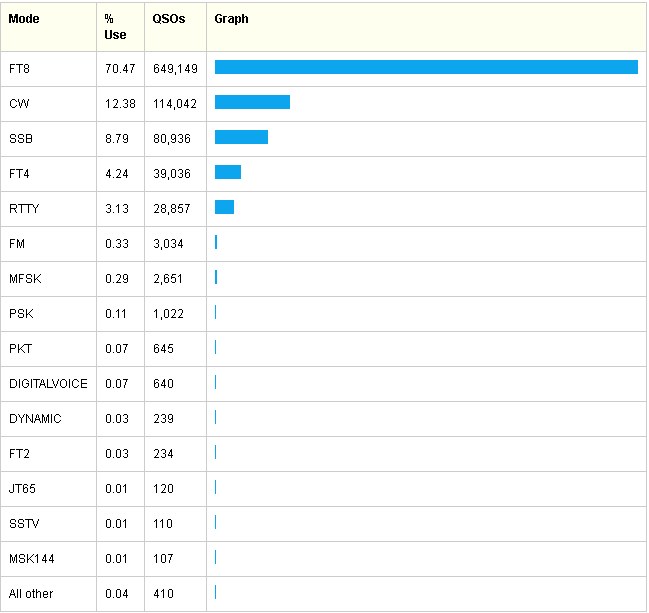
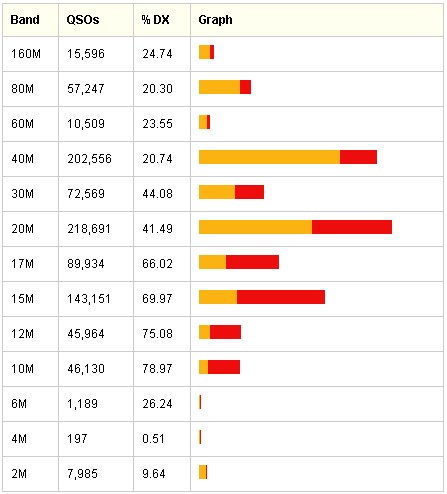
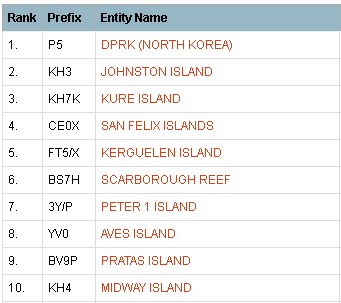
Club Log DX report
Our supporters


DXers have a choice! Get a free two week trial of The Daily DX and The Weekly DX and decide for yourself which fits your needs for informing you of all the DX news! Email bernie@dailydx.com or go to www.dailydx.com.
The Daily DX, 3025 Hobbs Road, Glenwood, Maryland 21738 · Phone 410-489-6518
From the Editor
If you have an article that you would like to share with INDEXA please pass along no later than December 15th for the Winter 2026 Issue.
73,
Steve KI4KWR
KI4KWR@gmail.com
The INDEXA Newsletter is a quarterly publication of the International DX Association. INDEXA is a 501(c)(3) non-profit organization.
Editor & Publisher
Steve Molo, KI4KWR
PO Box 6372, Huntsville, AL 35813 USA
KI4KWR@gmail.com
Distribution & Circulation
Paul Ewing, N6PSE
3052 Wetmore Dr, San Jose, CA 95148 USA
secretary@indexa.org
Membership application